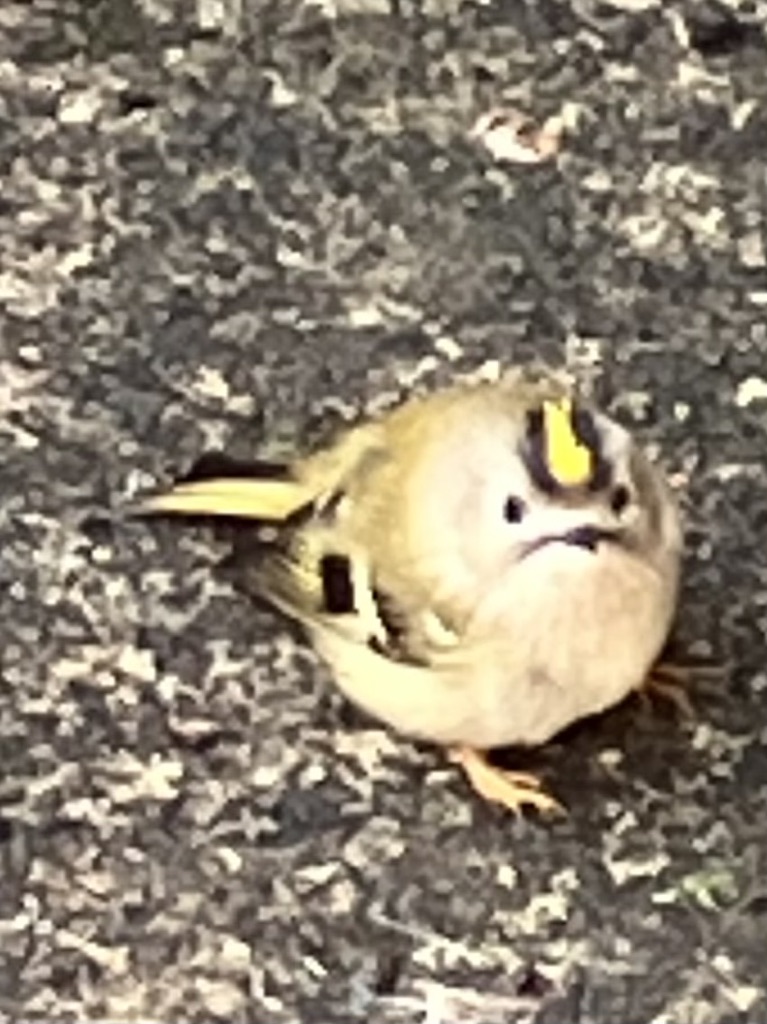
Visiting goldcrest, courtesy of Anna Hacket Pain.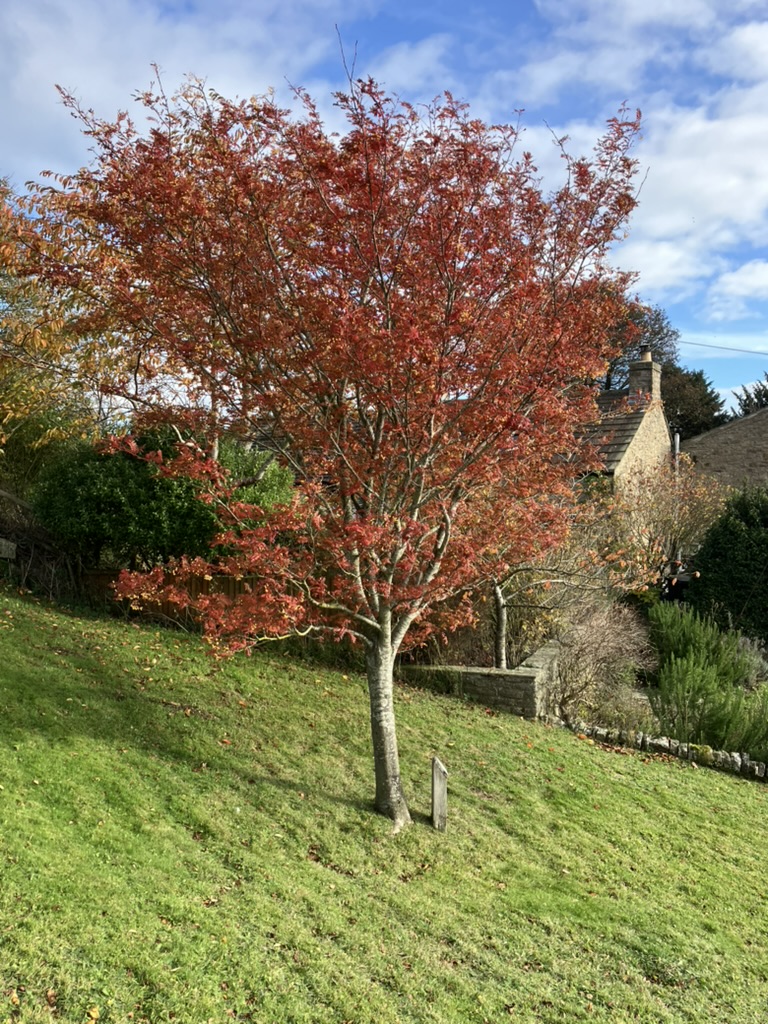
I finished the previous entry in this series with a reflection on the stresses on trees, insects, and other populations of heatwave, drought, and wetter, milder winters. There is increasing evidence that trees and the ecosystems that depend on them are stressed by extended periods of drought. During the periods of drought and heat such as we experienced this summer, trees may shut down essential systems, thus going into a form of dormancy. With the coming of mild rain, the Woodland Trust reports signs of premature spring, the formation and opening of flower and leaf buds before their time. This of course impacts on pollinators and other insects (and eventually birds) as early flowering and leaf development get out of synch with their needs. While these factors are probably more powerfully experienced in the south of the country, Yorkshire is not likely to be immune, and we need to keep an eye on our own woods for signs of the changes that may occur as trees and insects struggle to adapt fast enough to the changing climate.
Nevertheless, and despite the dry summer causing some premature leaf fall, we have experienced a wealth of traditional autumn colour – beech. oak, and rowan particularly fine. The long hot and dry period effectively came to an end in early September. No really heavy rain, but drizzle and enough rain to lead to a re-greening of the fields, and to fill garden water butts. Now in early November it is still for the moment relatively mild (night temperatures of around 4 C), while spells of sunshine continue to produce the occasional butterfly or bumble bee.
Birds: the swallows finally left in the first week of September. The RSPB is warning about declining populations of lapwings. The moors above the village are a good place to observe these wonderful birds - even impressionistic evidence of numbers is not without value. On which note, I have heard but not yet seen either redwings or fieldfares. The presence of large groups of blackbirds, house sparrows, and bluetits in gardens does seem to support the hunch that broods are apt to return to the places where they were (so to speak) born and brought up. Hares have been seen in the fields above Tulliscote. And the otters mentioned in one of the village meetings with Tarmac representatives, were not imaginary. The Otter Survey undertaken for the Tarmac application (see below) found signs of otters visiting the Keld Heads caves, and notes that
While camera monitoring did not confirm active use during the survey window, the field signs demonstrate that otters are utilising the surrounding habitat and may opportunistically enter the cave.
Now that the revised Tarmac application is available on the NYC Planning Portal, we need to study and comment upon its proposals for remediation and re-landscaping. Your attention is also drawn to the Preliminary Ecological Appraisal and associated reports (bird breeding, otters, bat survey, etc). Broadly, we need to think about the impact of further and prolonged development within the local context as a whole, a context that includes all of the expanding quarries along the ridge. With the opening up of Cote Pasture, we face the prospect of a continuous industrial zone stretching from Leyburn to Scarth Nick. Letters about the application must reach the NYC by 21 November.
The preliminary results of the most recent sampling of the Ure on 21 October are now in. This was carried out by volunteers under the aegis of the Yorkshire Dales Rivers Trust and the Stop Ure Pollution group. One of the testing sites, Lords Bridge, falls within our Parish. As has been evident for some time, the river (like the Swale and the Nidd) is seriously polluted. To take the results for e-Coli alone, the river exceeded 900 cfu/ml (cluster forming units) at 13 of the tested sites. (500 cfu/ml is the maximum level considered relatively safe for bathing). It’s scarcely re-assuring, but on this occasion Lords Bridge tested below the 500 mark – well below the local peaks at Hawes, Middleham, and Spennithorne.