Nature diary July – August 2026
So far, we seem to have escaped the worst extremes of this summer as experienced in other parts of the UK. From July into mid-August we had a succession of heatwaves, though temperatures rarely rose above 32 C. And while North Yorkshire was not officially in drought, we had no appreciable rain between late June and 16 August, when for the first time in weeks the water butts suddenly filled up. The landscape is parched but not desolate. The streams in Condenser Wood have continued to flow. Swallows have continued very active, though by mid-August the remaining swifts seem to have departed. The swallows showed early signs of gathering, and I counted a group of 24 on the overhead wires at the west end of the village on 12 August. On 22 August, Andrew Fletcher counted a group of 60, presumably in the final stages of gathering before departure. I have been struck again by the way broods of young birds stick together – notably house sparrows and blackbirds.
There was a late flowering Common Spotted Orchid hanging on in Condenser Wood and Spear Thistles all around.
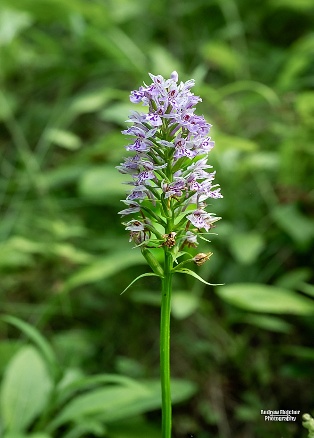
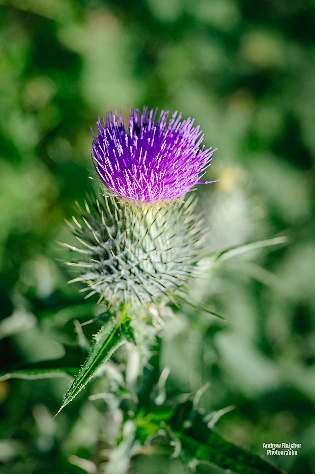
Andrew Fletcher writes:
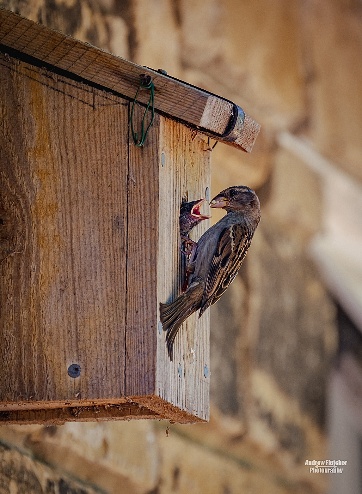
“We had great delight watching the Sparrows being fed and then fledging. The male disappeared but the female did a wonderful job often feeding often three times a minute for all day long. They then stayed around after fledging.”
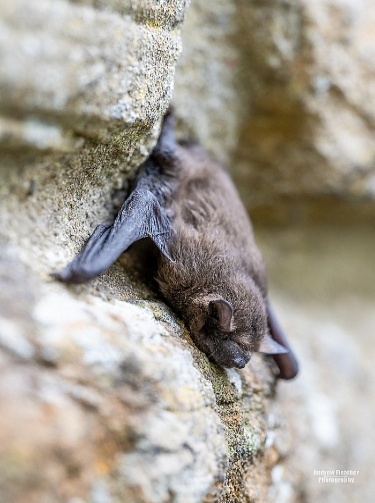
Andrew further writes: “On the first day or so of the month I noticed a bat clinging to the house wall just above ground level. They are in a roof space of the house for a couple months during the summer. This bat stayed on the wall for three days and only went when it started to rain. It was only about one and half inches long but research showed it was fully grown.”
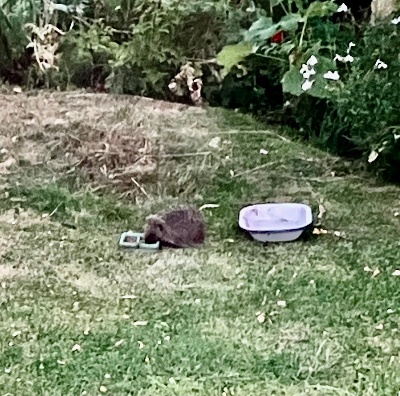
Hedgehogs, as well as birds, have been grateful for water.
Rowan berries were in full colour by the second week of August.
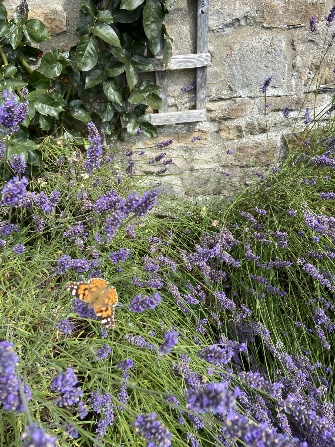
Butterflies came out in large numbers in the sunshine, with wonderful displays of peacocks, tortoiseshell, red admiral, etc. Gillian Stringer’s photograph below shows a Painted Lady butterfly in the Garden at Garthfoot.
However, the day I attempted the butterfly count I only managed a flock of whites, and a tortoiseshell which appeared after I had reached the end of my 15 minutes.
Strong sunshine and both garden and wild flowers produced bumblebees in profusion https://www.bbc.co.uk/news/articles/c141lymnl2yo Bees seem to find foxgloves and lavender particularly attractive. Hummingbird Hawk moths have been repeatedly seen in the Village.
In Spring Wood, the Woodland Trust mowed the paths but declined a request to cut back the heavy growth of bracken. Bramble continues to overrun the woods, though blackberries have been few and under-developed. Has anyone else seen bats? I’ve only had the occasional sighting. Thistles seem to have responded to the heat with the largest crop of thistledown I have ever seen. As I write, the latest version of Tarmac’s planning application (together with its elaborate plans for remediation and restoration) is still awaited.
As bodies like the RSPB and Wildlife Trusts have long pointed out, the impacts of heat, drought, and less predictable seasons are not experienced simply in the stresses of the here and now. As heatwaves and drought, or changes in the flowering seasons of plants become more frequent, longer-term impacts become apparent. Wetter winters and dryer summers disrupt patterns of feeding and reproduction. Thus, accelerating climate change gives us even more reasons for keeping our eyes and ears open to the condition and well-being of the natural world on our doorsteps.
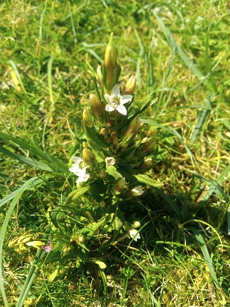
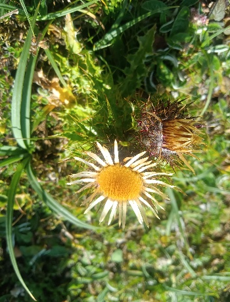
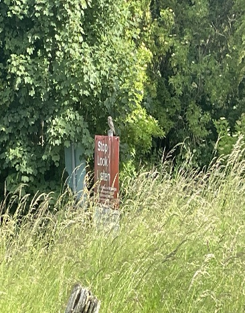
Autumn Gentian Carline Thistle Little Owl
Thanks go to Andrew Fletcher, Carol Fletcher, Gillian Stringer and Michael Sayers for their photographs.